
Meet the Major: EMS with Lauren Dumas
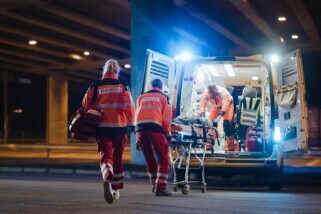
At 60 miles an hour through unpredictable traffic, there is no sterile trauma bay, no specialist down the hall, and no pause button—just a swaying cabin, a ticking clock, and an emergency medical services (EMS) team deciding what to do next. From delivering babies to performing lifesaving procedures, EMS is a career that demands rapid critical thinking, adaptability, compassion, and a remarkable breadth of medical skill. In this edition of Meet the Major, Lauren Dumas, Brightpoint's EMS Programs Director, takes us behind the scenes of this fast-paced, rewarding field and reveals how Brightpoint prepares students to answer the call.
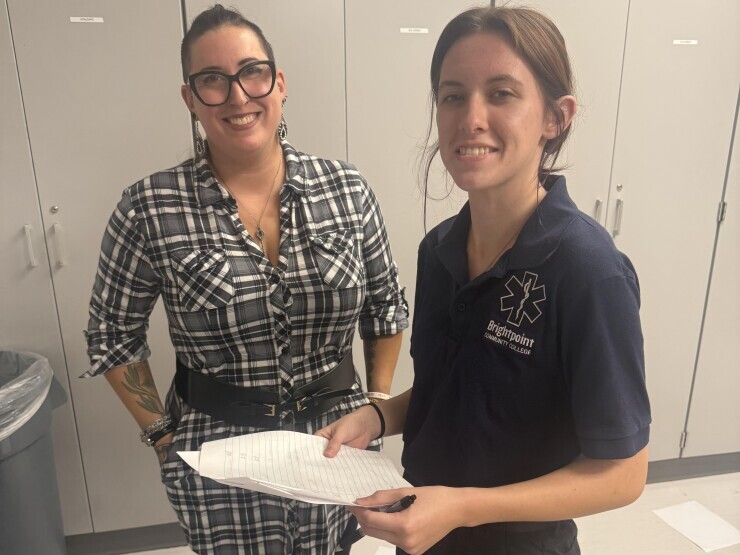
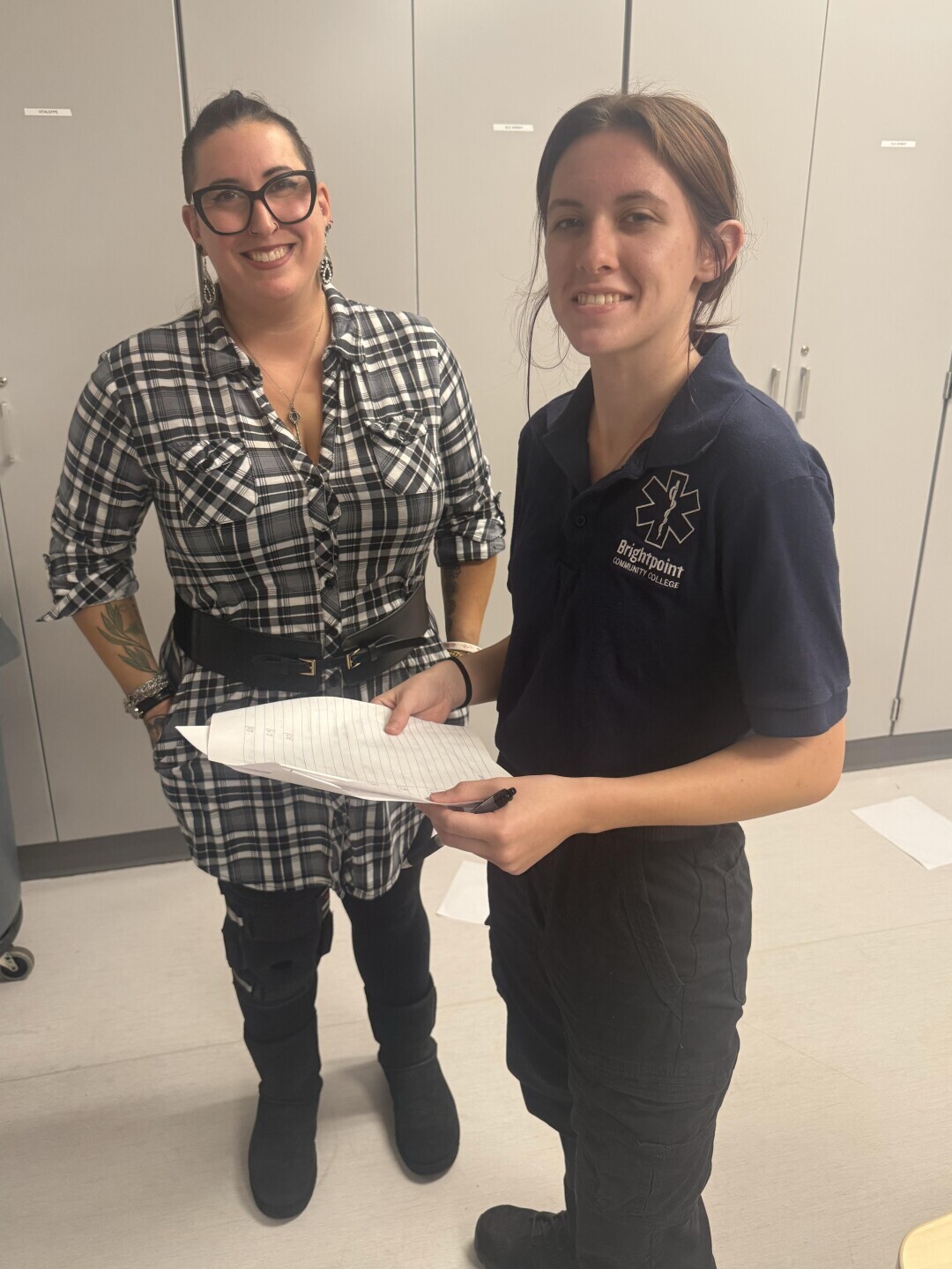
Lauren Dumas is the Emergency Medical Services (EMS) Programs Director at Brightpoint Community College, where she oversees the EMT, Advanced EMT and Paramedic programs and serves as a full-time paramedic instructor. An experienced paramedic and educator, Lauren brings years of hands-on emergency response, healthcare leadership and EMS instruction experience to the classroom. She holds a master's degree in higher education from the American College of Education and a bachelor's degree in healthcare management from the University of Virginia. Passionate about preparing the next generation of first responders, Lauren combines real-world experience with hands-on instruction to help students develop the skills, confidence and critical thinking needed to save lives.
Question: What's one thing students get to do in this program that's much more interesting than the course title makes it sound?
Dumas: That's a tough one because that's everything in EMS!
Most of the time, people think of EMS and equate us to ambulance drivers. They don't realize that, especially at the paramedic level, we're essentially a small, mobile emergency room.
Students learn so much more than people expect. They develop lifesaving skills, learn to think critically under pressure and make split-second decisions that can literally mean the difference between life and death.
One thing that surprises students is that even at the basic EMT level, they learn how to help deliver a baby. They don't know when they first come into the program that they're going to be delivering babies!
Any emergency you can think of, we're going to respond to it. We try to prepare students for everything, even though we can never predict exactly what we're going to encounter.
There's nothing quite like EMS. I tell students they're going to get bitten by the bug and they're going to love it.
If you're an adrenaline junkie, there's no other feeling like sitting in the back of an ambulance, going lights and sirens to an emergency. You might think you know what you're responding to, but sometimes what dispatch tells you is completely different from what you find when you arrive.
You have to think quickly, adapt and make decisions under pressure. That's what makes this field so exciting.
Question: What first made you interested in this field? Was there a particular person, experience or moment that hooked you?
Dumas: My journey into EMS actually started out of desperation.
I was a single mom with two young kids, and I was working as a personal trainer. Even though I loved being a personal trainer, it was a sales-based income, so my earnings were never steady. They were always going up and down, and I was having a really hard time supporting my kids.
At the time, I lived in Chesapeake, and one of the regulars at my gym was a retired fire captain from Norfolk. He kept telling me, "You're in great shape. You can totally do this. You've got the mentality for it." I'd already been interested in the medical field. As a personal trainer, I knew anatomy and physiology. He kept encouraging me, telling me it was a great career and that I would love it.
I decided to try out for the Newport News Fire Department, and I was accepted on my first attempt. At the time, I was told that was almost unheard of because most people go through the selection process two or three times before they're hired. I was very fortunate.
I initially got into the field to support my kids. Once I started working for Newport News, I learned very quickly that I didn't like the firefighting side. It just didn't interest me. You're putting your life on the line, and I realized I wasn't comfortable running into burning buildings. But EMS was fascinating. When I started learning about all the things I could potentially do as I progressed toward becoming a paramedic, I knew that's what I wanted to do.
I think the human body is a big puzzle. I like trying to figure out puzzles.
EMS is a great way to keep your brain sharp.
Any emergency you can think of, we're going to respond to it. We try to prepare students for everything, even though we can never predict exactly what we're going to encounter.

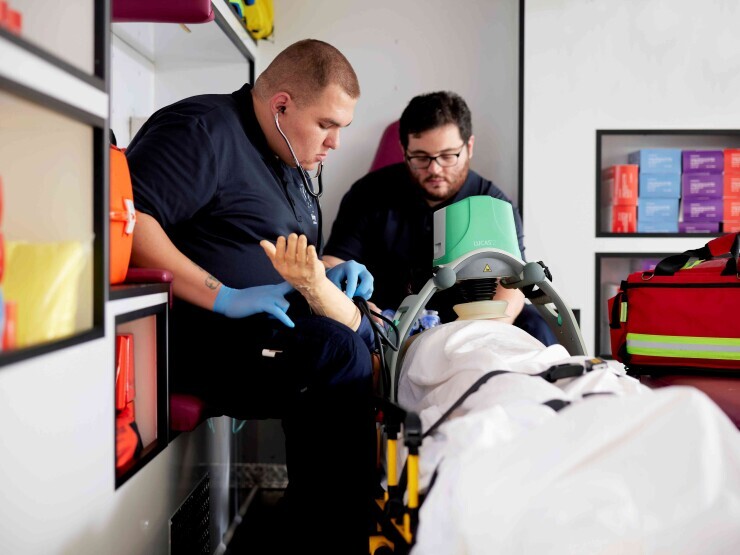
Dumas: I think the biggest thing students interact with is our high-fidelity mannequins. We have Ricardo, who is an adult male; Raquel, who is our adult female obstetrics mannequin; and Hal, who is a pediatric mannequin.
They breathe. They have pulses. Their eyes open and react.
Hal is a little creepy! Nobody likes working with Hal because he'll sit in his chair, turn his head and follow you around the room. He can actually track you.
The high-fidelity mannequins are one of our biggest selling points because they're as close to a real human as you can get. Raquel is especially interesting because she can actually give birth. She's amazing! We use her to teach students how to assist with childbirth, which is a basic life support skill for EMTs.
All our mannequins have names, and I talk to them like they're real people. It might sound a little creepy, but there's a reason for it. One of the things we grade students on is called the affective domain, which is basically their bedside manner.
That's become a major focus in EMS. Historically, our bedside manner hasn't always been the best because we're constantly dealing with life-and-death situations. We're used to picking someone up, taking care of them, dropping them off and moving on to the next patient.
Now we really focus on helping students understand how they interact with patients and how their behavior affects the people they're caring for.
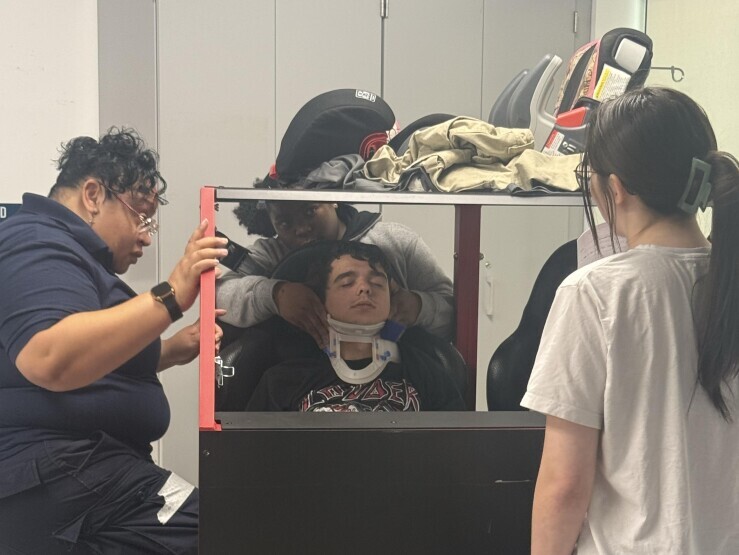
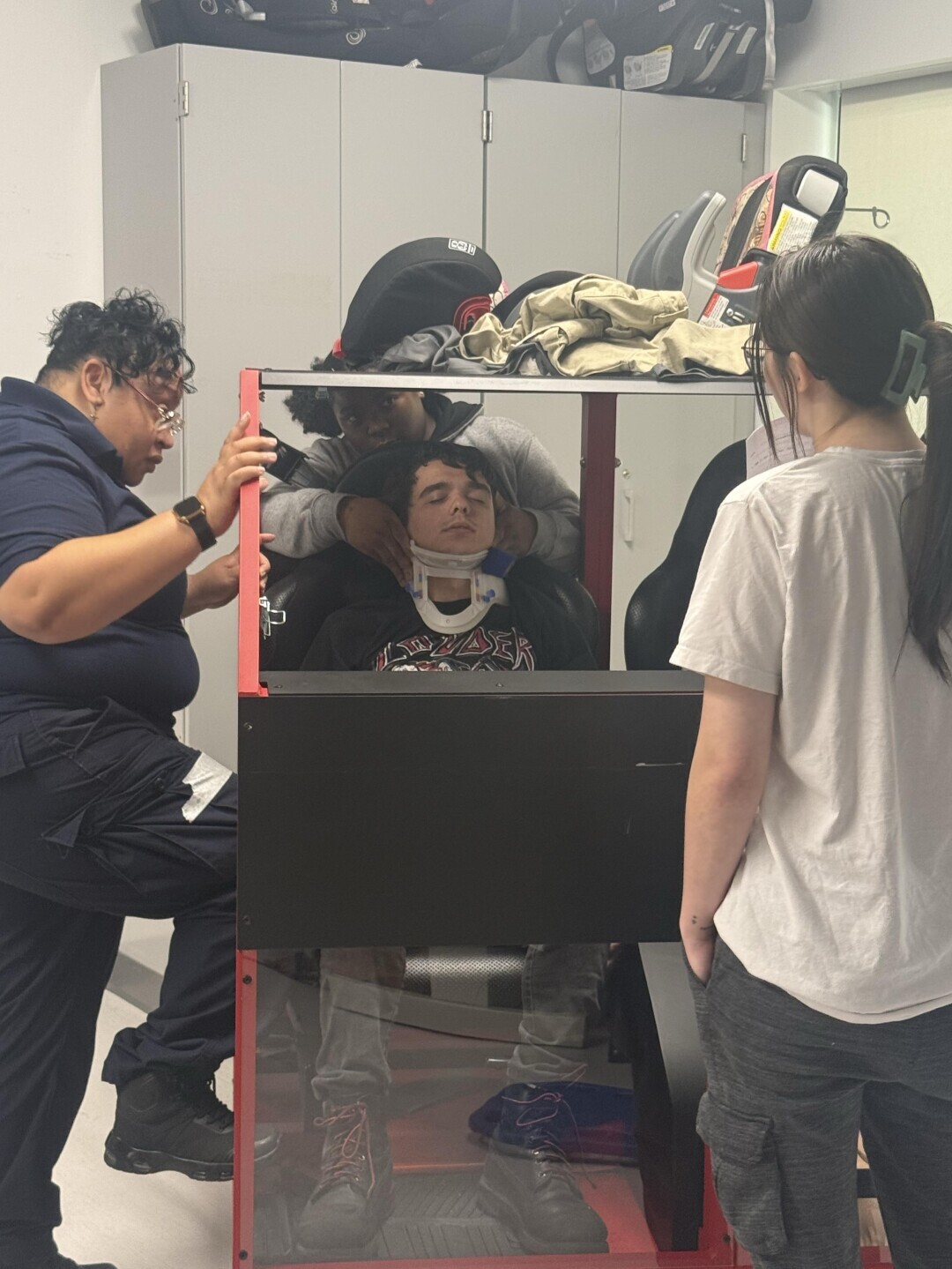
In class, we also expect students to practice certain interventions on each other. They have to become comfortable touching and interacting with people. It's experiential learning. We use the mannequins, but we also have students practice appropriate skills with one another so they can get comfortable working with actual people.
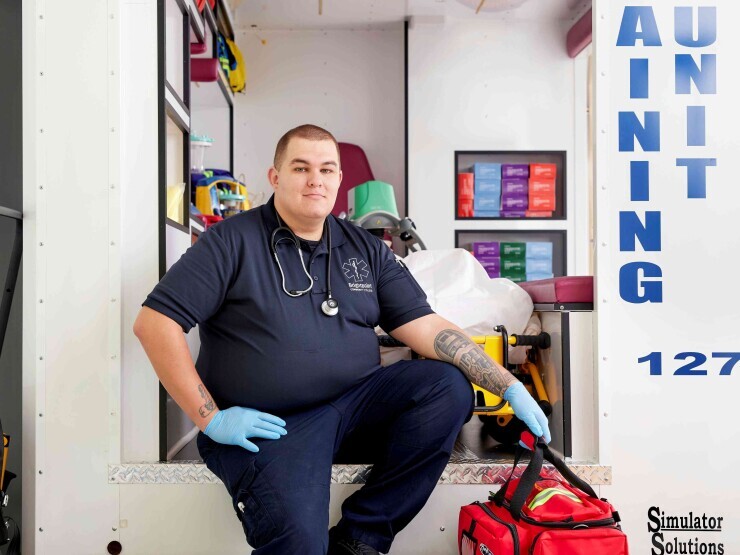
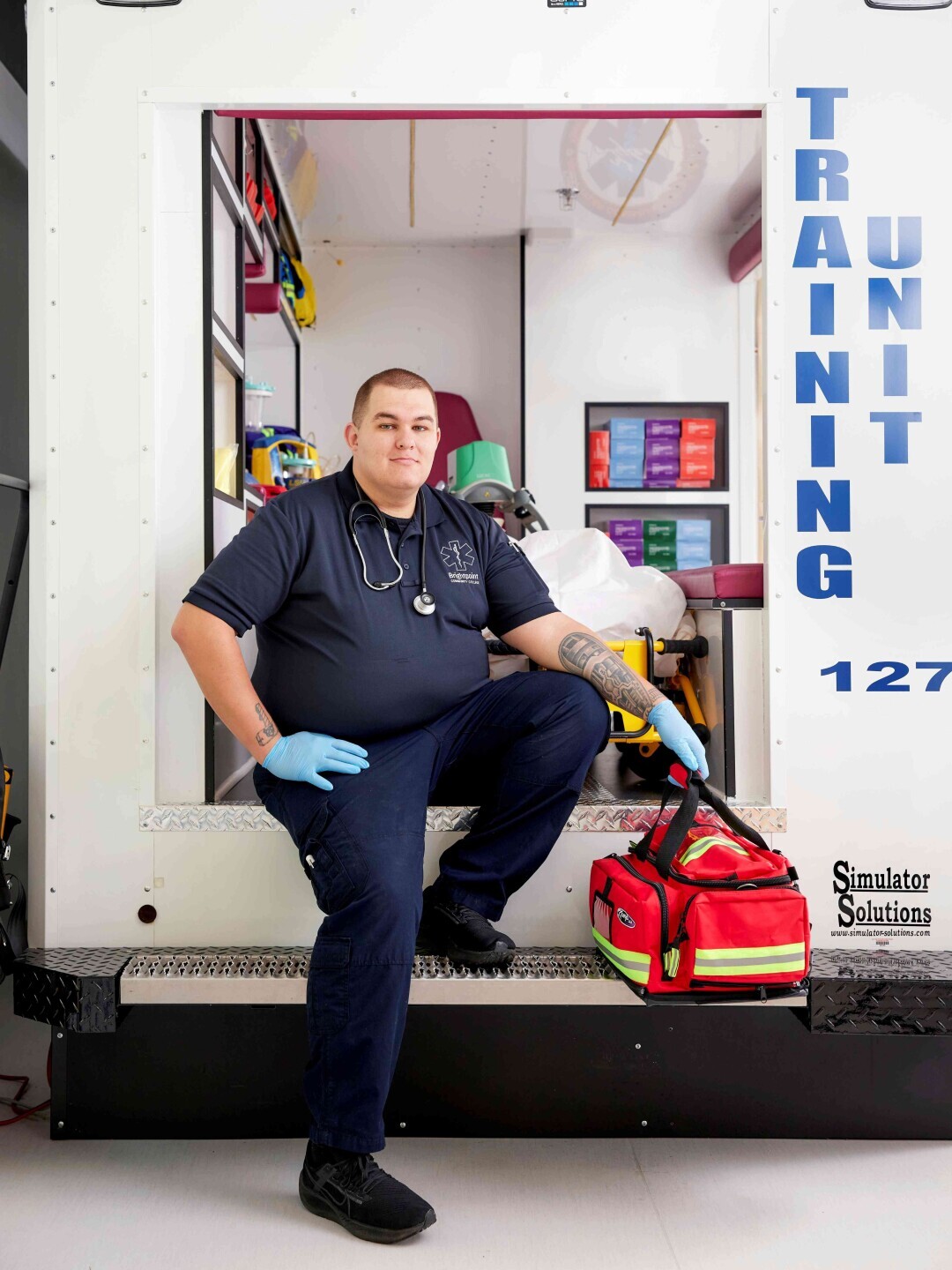
We also have two ambulance simulators. Students walk into the classroom, and the first thing they see is this big ambulance built right into the room. It has lights, simulated oxygen and it moves! We can simulate driving over potholes in the city. We move the ambulance while students are performing interventions so they can understand how difficult it is to stand up and perform CPR while the ambulance is going over bumps. We teach them how to work around those challenges.
That's our classroom simulator. We also have an outdoor simulator built into a trailer. We can take students outside to perform scenarios because EMS professionals work in all kinds of weather conditions and locations. We're not always called to people's homes. Sometimes we're called to parks, businesses or recreational areas. We try to take students out of the classroom as much as possible to give them more experiential learning.
I'd say the high-fidelity mannequins and the two ambulance simulators are some of the biggest highlights of our program.
Students walk into the classroom, and the first thing they see is this big ambulance built right into the room. It has lights, simulated oxygen and it moves! We can simulate driving over potholes in the city. We move the ambulance while students are performing interventions so they can understand how difficult it is to stand up and perform CPR while the ambulance is going over bumps. We teach them how to work around those challenges.

Dumas: Absolutely. We always say EMT is a good stepping stone to anything in healthcare. EMS teaches a level of critical thinking, sound judgment and split-second decision-making that's incredibly valuable.
We're teaching students to think under pressure and under very stressful conditions. When they get out into the field, they're going to be making life-or-death decisions, often with very little time to react.
We purposefully put students in stressful scenarios so they can learn to regulate their emotions while making sound decisions. They have to learn to process information quickly and understand the consequences of their decisions. That combination of critical thinking, emotional regulation and adaptability prepares them for so many different careers in healthcare.
I have a former paramedic student who's now in medical school to become an emergency room physician. He's still a paramedic, too.
A lot of paramedics go on to medical school. Others complete bridge programs to become registered nurses. We often see paramedics transition into nursing later in their careers when they no longer want to work on an ambulance because of the physical demands.
There are also opportunities people might not think about. You can contract with the military or other organizations to work overseas as a medic. In some of those roles, you're essentially functioning like an emergency room physician in the field. Depending on the role, you may be able to perform procedures such as sutures and staples that we don't typically do on the civilian side.
There are also companies like Amphibious Medics that contract EMTs and paramedics to staff events. If there's a movie being filmed, an obstacle course race, a marathon or another large event, these companies provide medical personnel.
You can also work on oil rigs as a paramedic and make a lot of money, as long as you don't mind being in the middle of the ocean on a rig.
Another option is becoming a flight medic and working on a helicopter. A lot of paramedics aspire to that because we see flight medics as the cream of the crop. You really have to know your material and be at the top of your game in terms of knowledge and skills.
Paramedics can also work as technicians in emergency rooms.
And, there are different types of ambulance services. You can work as a 911 paramedic, responding to emergency calls, or you can work in interfacility transport, which is nonemergency care. For example, you might transport a bedbound patient by stretcher to a doctor's appointment or dialysis, or bring someone home after they're discharged from the hospital.
There's the emergency side and the nonemergency side.
There are so many avenues students can pursue, even if they don't want to work on an ambulance.
We purposefully put students in stressful scenarios so they can learn to regulate their emotions while making sound decisions. They have to learn to process information quickly and understand the consequences of their decisions. That combination of critical thinking, emotional regulation and adaptability prepares them for so many different careers in healthcare.

Question: What's something your students have taught you?
Dumas: They've taught me to expect the unexpected, especially with their questions!
I have one paramedic student right now who I swear makes it his goal to stump me every class. And he does!
He comes up with the most in-depth questions. Just yesterday, he asked me a chemistry question. We were doing an exercise on polypharmacy, which is when patients, particularly geriatric patients, take multiple medications. We were looking at how medications interact with one another and how those interactions can influence how a patient presents. He asked me an incredibly detailed question about the chemical makeup of a medication. I told him, "I don't know. I'm not a chemist!"
My students are very challenging, which I love because it keeps me on my toes. It shows me where my knowledge gaps are and what I need to study so I can be better prepared for the next cohort of students.
They've also taught me to expect the unexpected in other ways.
When I came to Brightpoint in January 2025, I initially came in as a full-time instructor. I took over the EMT and paramedic classes.
At the end of my first EMT class, my students surprised me with a little Ferris wheel they had made. They decorated it with pictures of us from class. It was so creative and thoughtful.
I've had other students make things for me, too. A lot of the items I have displayed in my office were gifts from students. I never expected that.
I love being a professor and a teacher. I've known since I was 16 that I wanted to teach in some capacity.
I don't ever expect gratitude, but when you receive it, it's so heartwarming. That's why I say students have taught me to expect the unexpected. They challenge me with difficult questions, but they also bring so much joy.
I still mentor some of my former students. They're not in my classes anymore, but I continue helping them along. They're basically like my own kids. I take them under my wing and help them as best I can.
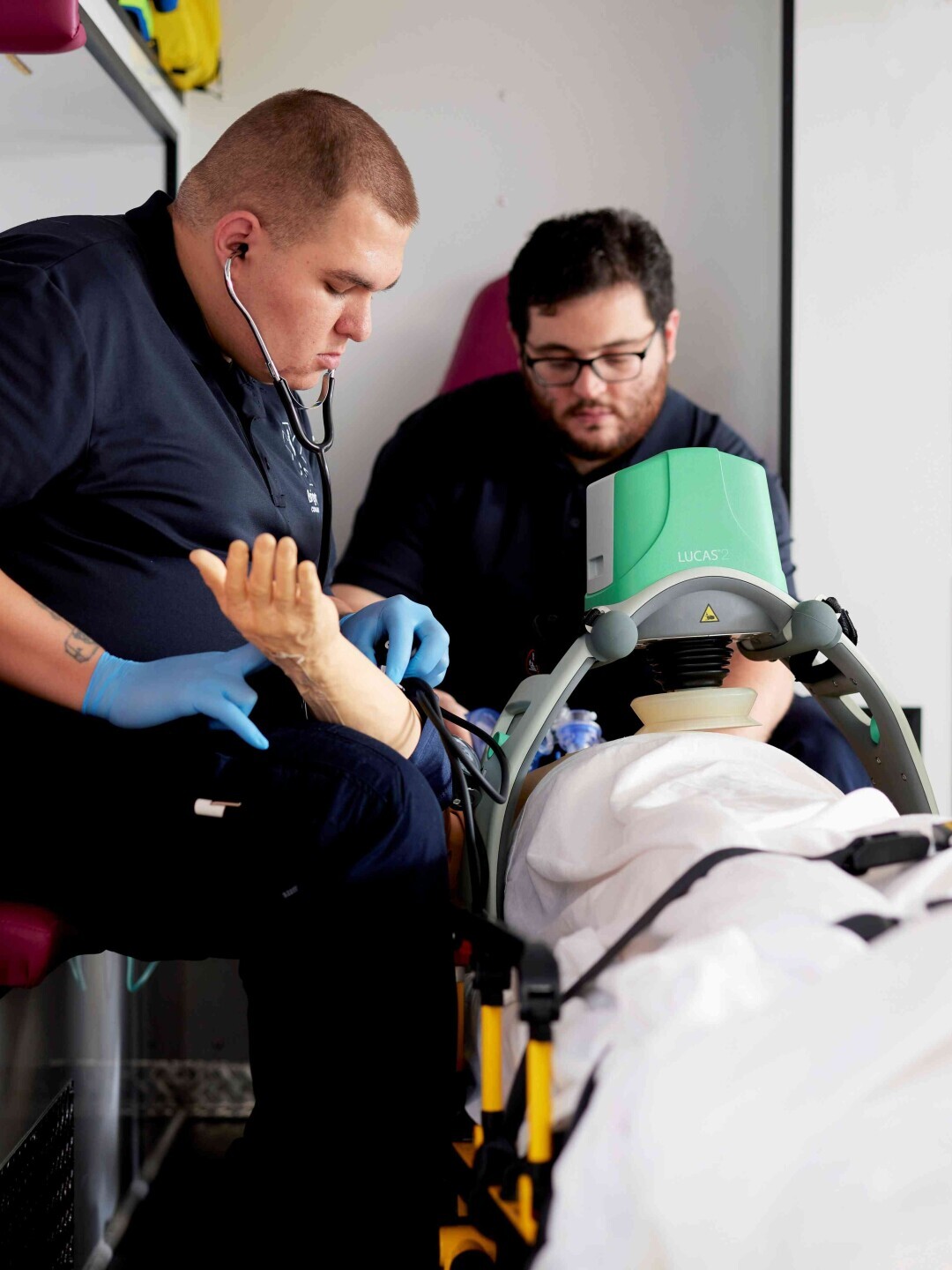
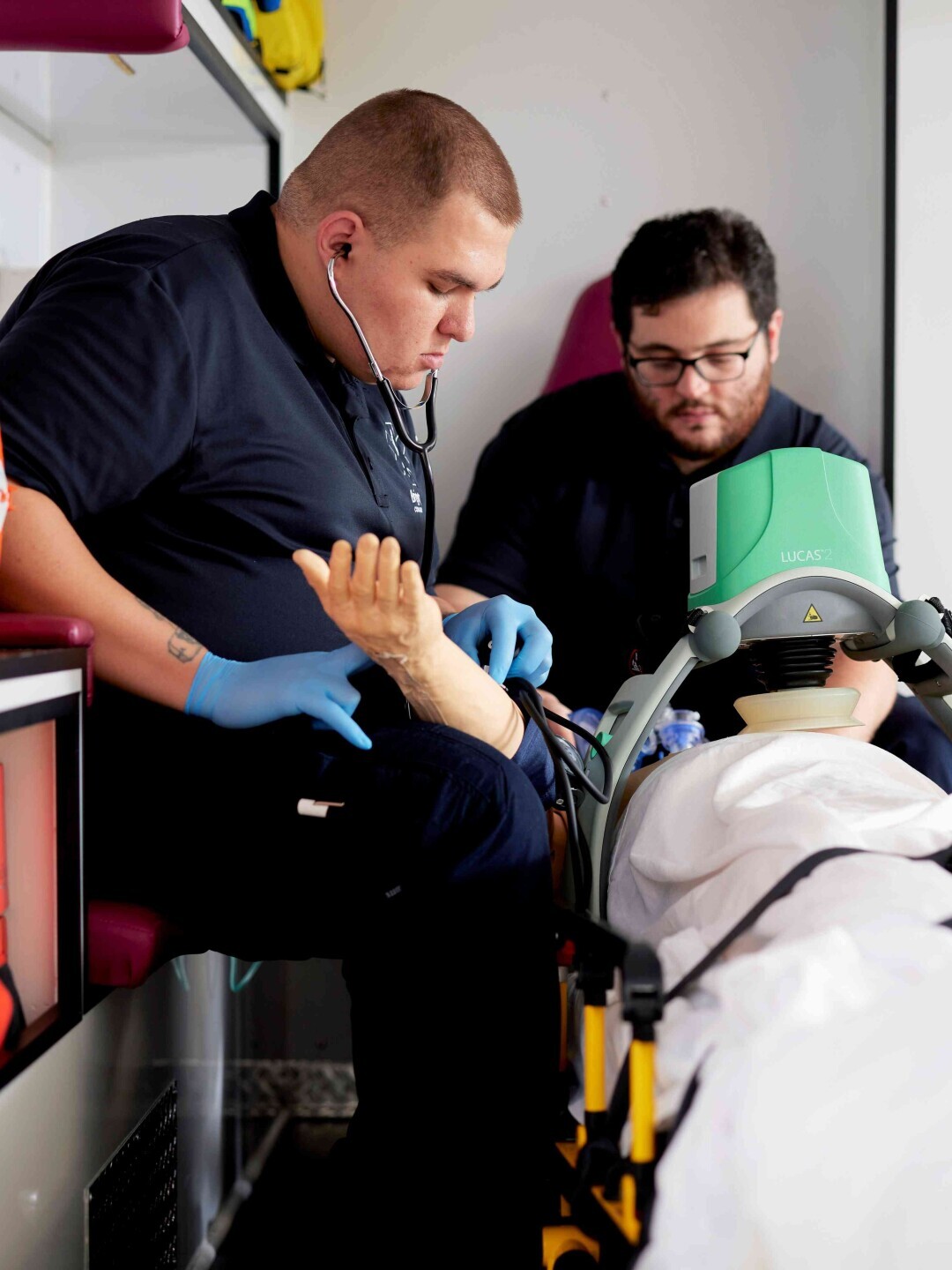
We're essentially doing many of the things a physician would do in an emergency room, except we're doing them in someone's home, on the side of the road or wherever the emergency happens. And often, it's just us and our partner. We don't have a team of nurses, respiratory therapists and physicians standing by. That's why the training is so important.

Question: What could be next for someone who chooses EMS as their path?
Dumas: Everyone who starts in EMS has to become an EMT first. That's a regulation from the Virginia Office of EMS.
So everyone starts as an EMT. The question is, how far do you want to go?
You can start as an EMT, move up to Advanced EMT and then become a paramedic. Each level builds on the skills you've already learned.
At the EMT level, students learn lifesaving techniques such as airway management, positive-pressure ventilation, bleeding control, applying tourniquets, packing wounds and splinting broken bones.
Advanced EMTs build on those skills. They can start IVs and administer a limited range of medications, including certain pain medications, airway medications and epinephrine.
At the paramedic level, we can do everything EMTs and Advanced EMTs can do, plus a wide range of advanced procedures. Paramedics can administer many more medications, intubate patients, perform electrical therapy for cardiac emergencies and interpret 12-lead ECGs to identify conditions such as heart attacks.
We can also perform advanced airway procedures, including surgical cricothyrotomies, when a patient's airway is severely compromised. We often lead cardiac arrest calls in the field, making critical decisions with a high level of autonomy.
We're essentially doing many of the things a physician would do in an emergency room, except we're doing them in someone's home, on the side of the road or wherever the emergency happens. And often, it's just us and our partner. We don't have a team of nurses, respiratory therapists and physicians standing by. That's why the training is so important.
Once you're a paramedic, you can continue your education and become a critical care paramedic, which involves additional schooling and an expanded skill set.
There are opportunities to advance throughout your career.
For example, you can become an EMT at 16 years old. Most agencies won't hire you for a paid position until you're 18, but let's say a student becomes an EMT at 16 and volunteers for two years. When they turn 18, they could graduate from high school and potentially earn $20 to $25 an hour as an EMT. I absolutely believe in higher education and earning degrees, but EMS gives students an opportunity to start a career right out of high school.
There's also a sense of job security. I tell students that our jobs are AI-proof. With all the conversations about artificial intelligence replacing jobs, people are concerned about their futures.
Emergencies are always going to happen, and someone is always going to need to respond. Whether you stay at the EMT level or continue to become an Advanced EMT or paramedic, there will always be a need for people in this field.
And it's a career where you can see the impact you're making in real time. You get a level of job satisfaction that a lot of other careers don't provide because you can immediately see the outcome of your interventions and the care you've provided to your patient. That's what makes it so rewarding.
November 25 – 29
On November 25, the college will be operating remotely from 8:00 a.m. – 12:00 p.m. There will be no classes, and no services will be offered on campus.
From 12:00 p.m. on November 25 – November 29, the college will be closed for Thanksgiving break.