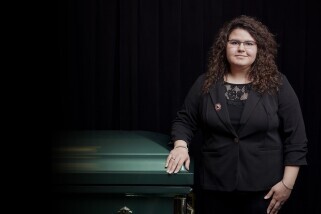

Meet the Major: Funeral Services with Rick Sikon
There's a lot more life in funeral services than you might expect. Beyond helping families navigate loss, the profession is built on meaningful relationships, compassion and even connections to lifesaving organ and tissue donation. For Richard "Rick" Sikon, director of Brightpoint Community College's funeral services program, a career that began almost by accident has led to more than 40 years of unexpected opportunities, lasting relationships and a chance to make a difference in countless lives.
Richard “Rick” Sikon is the director of Brightpoint Community College’s funeral services program, bringing more than 40 years of experience in funeral service and education to his work with students. A graduate of the college when it was known as John Tyler Community College, Sikon has dedicated much of his career to preparing future funeral service professionals while building connections across the industry. His experience spans funeral directing, teaching and collaboration with organ and tissue donation organizations.
If you had 30 seconds to convince a student who had never considered funeral services to take a closer look, what would you tell them?
Sikon: That's a tough question. It's not so much talking them into considering the major. It's giving them all the information, because it takes a special person to be in funeral services.
The public perception of what we do is totally different from the realities. We used to joke years ago that the person who drives the really nice car and wears the really nice suits, those are the people you see being part of the funeral home. But you don't consider what goes on behind the scenes.
It's definitely a customer service-based industry. It takes a certain mentality. So, convincing a student to do funeral services is more about asking, "Is this really something you've considered? Is this something you really want to do?"
Not everybody can do it.
What's something about your field most people would be surprised to learn?
Sikon: A lot of it is relationships. It's building relationships, more so than business or science.
You're dealing with individuals who are undergoing trauma, whether it's an expected death or a sudden death.
It's important to understand institutional knowledge and how to apply that knowledge to what you do. Everybody wants to be in charge, but the question is whether they have the background and institutional knowledge to actually be successful.
Most people think what they see in the front, or what is visible to the public, is the reality. But there's a lot that goes on behind the scenes that they don't see. Funeral directors and funeral home staff deal with that on a daily basis.
A lot of it is relationships. It's building relationships, more so than business or science. You're dealing with individuals who are undergoing trauma, whether it's an expected death or a sudden death.
Director of Funeral Services (pictured)
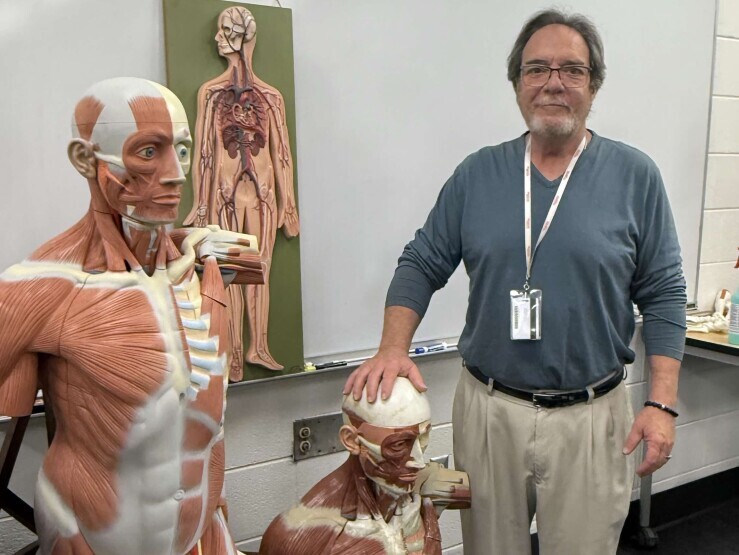

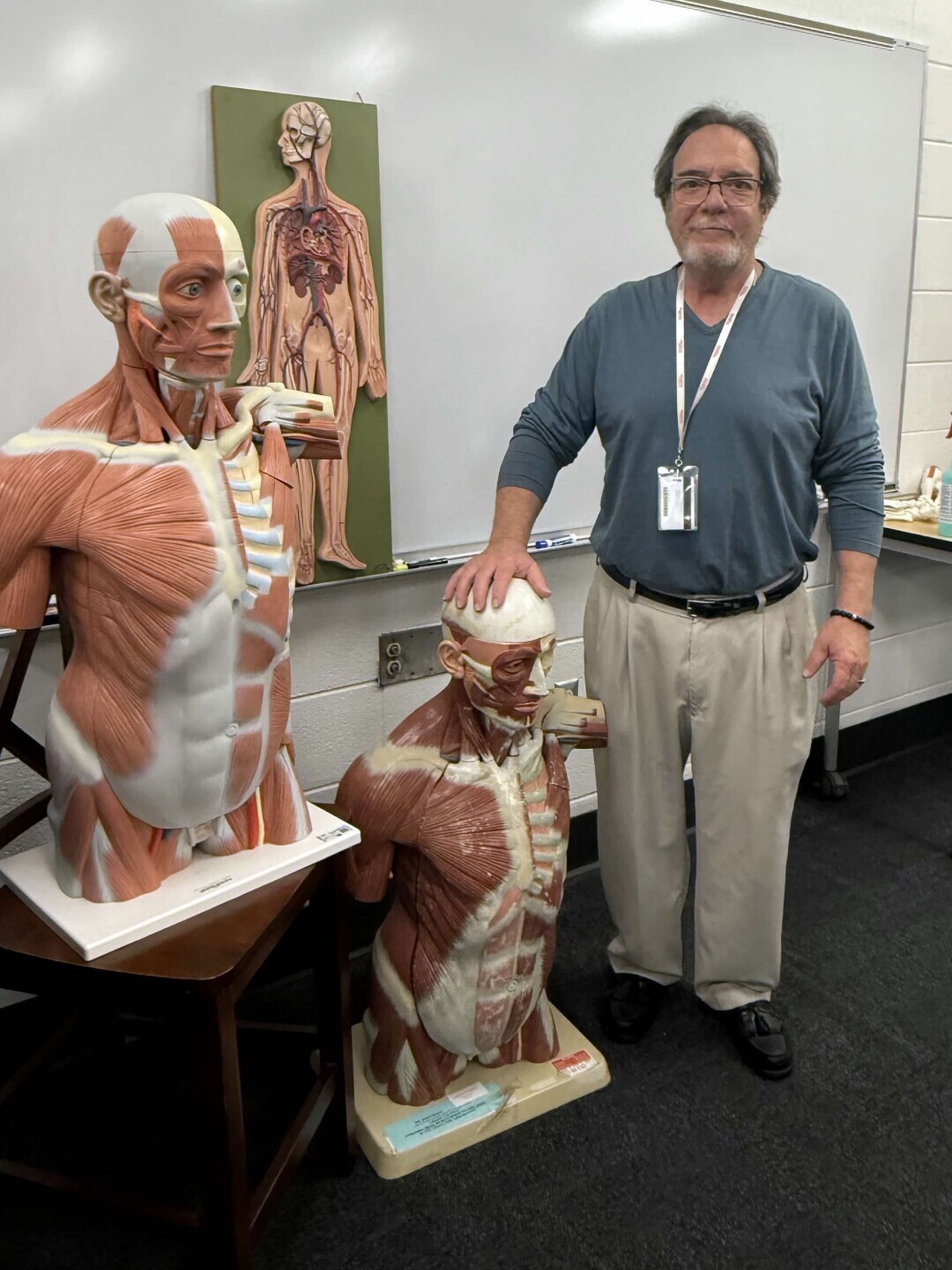
What first made you interested in this field? Was there a particular person, experience or moment that got you hooked?
Sikon: Actually, it's an accident that I wound up in funeral services.
I was graduating from college and trying to decide whether I was going to graduate school or medical school.
Because I was working basically full-time while going to college, I became acquainted with people who worked for a local funeral home. We became friends, and they asked what I was going to do. I didn't know.
They said they were looking for people to help them out. They knew me, they trusted me, and they offered me a position at the funeral home.
It wasn't with the intention of becoming a funeral director, just being support staff. They were going to pay me a lot more than what I was making at the time, so I did that.
After I started working there, I asked, "What do I have to do to become a funeral director?" I thought it was kind of cool, and the money was good.
We had the college right here in Richmond, and I figured out that I only had to go two semesters to finish my degree. So I decided to do that and get my license.
That's how I wound up in funeral services.
Did you get your two-year degree here from Brightpoint, formerly John Tyler?
Sikon: Yes. I had already finished my four-year degree at VCU.
I was one of thosepeople who decided when they got into college that I wanted to finish as soon as I could. So I finished in three years instead of four.
Coming here and getting my associate degree was like my fourth year.
What equipment, technology, facilities or experiences do students get access to that might surprise someone who's not familiar with the program?
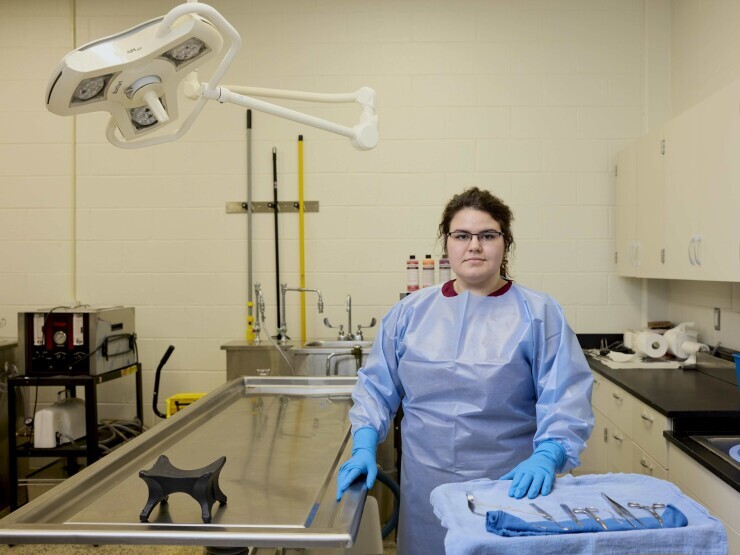
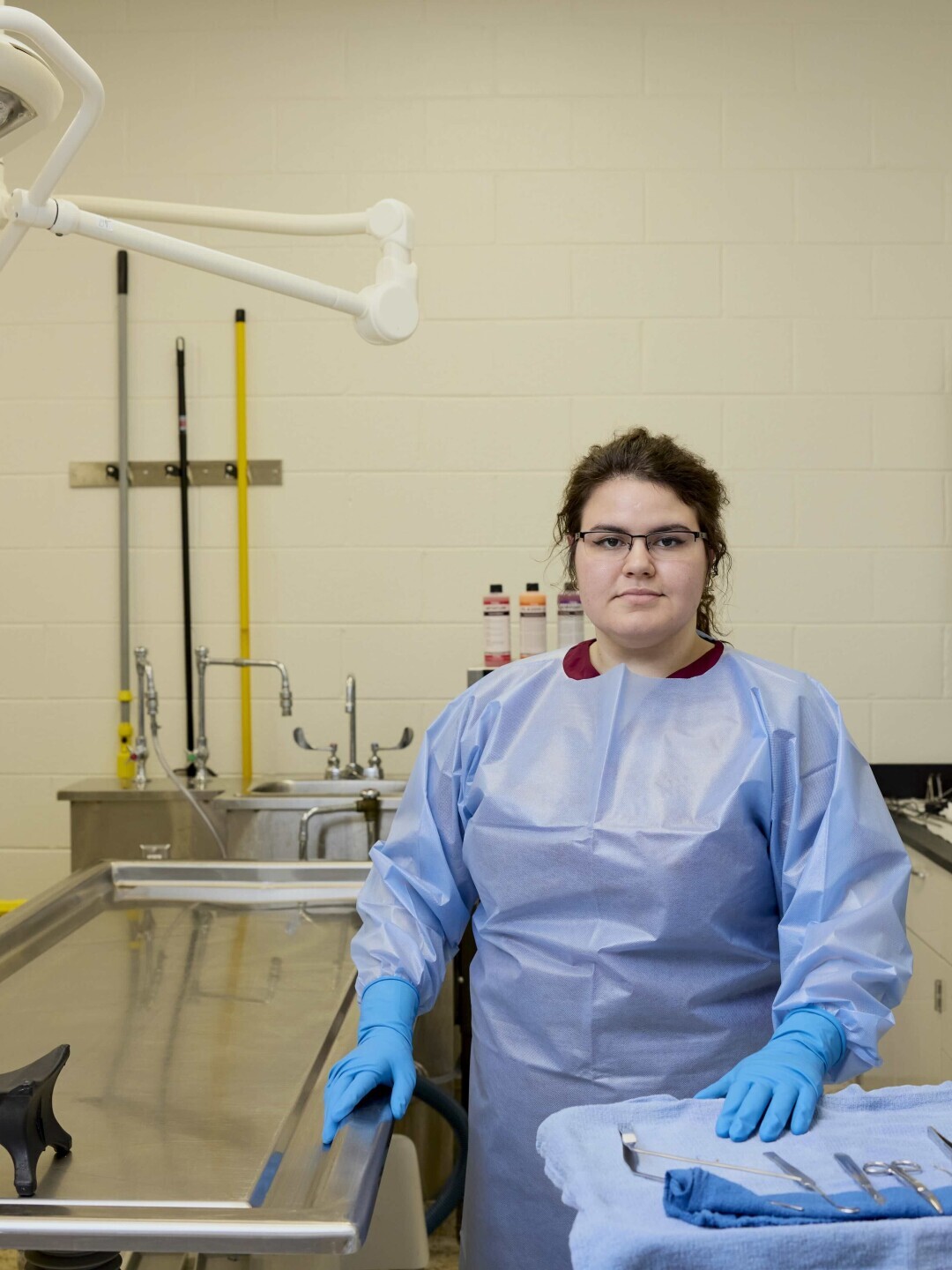
Sikon: Just the fact that we have a working, on-site preparation facility is a huge advantage.
One of the biggest changes in education that we've seen over the past 20 years is distance learning, affording students the opportunity to complete their technical abilities while they're employed in the industry rather than getting hands-on experience here.
There are pros and cons to both ways.
For the student who has never had any exposure to that aspect, having a working lab here, where we can work hands-on with the student and provide them with basic skills, is really valuable.
For our readers who may not know what a preparation lab is, can you explain that?
Sikon: It's part of the process in which we're preparing the individual, the deceased, for disposition.
It's ultimately embalming, but it's a chemical treatment. It's a process in which our students are learning the basics.
Like anything else, you gain more experience by doing.
You learn how to access the arteries and veins that you need for the process and some of the mechanical processes involved.
But you also learn how to apply the theory that you're learning in lectures and relate that to actual hands-on experiences.
Just the fact that we have a working, on-site preparation facility is a huge advantage....For the student who has never had any exposure to that aspect, having a working lab here, where we can work hands-on with the student and provide them with basic skills, is really valuable.
Director of Funeral Services

Where have you seen Brightpoint students or graduates go next?
Sikon: We've had students who have graduated from our program and gone into the industry and made a huge impact.
We've had students who have used this as a steppingstone. They've utilized the knowledge and motivation they gained from completing the program to go on and do other things.
One of the most interesting things about being in this position is that the funeral service community, nationwide and even statewide, is a very close community. Everybody knows everybody. One of the other instructors and I used to joke that this grapevine has no branches, because everybody is involved and everybody hears what everybody's doing.
Keeping up those relationships with former students is important. I've been involved with Brightpoint, formerly John Tyler, for over 40 years, so there are a lot of students.
We've had students who've used this as a steppingstone to go to medical school. We've had them go into dental school.
We've had them become corporate CEOs of large funeral service groups or other industries.
We've had students who have gone on to make a huge impact on the medical field or go into research.
An example of that is one of our adjunct faculty members, Jake Smith, who made a transition from a totally unrelated industry into funeral service.
He got an education here, and it gave him the confidence to say, "I want to do more."
He continued his education and had the opportunity to work at the University of Tennessee with their forensic anthropology program. He actually oversaw the body farm there for a number of years and is internationally known because of his consulting work. He worked directly with Bill Bass, who's the father of forensic anthropology.
It makes me feel good that somehow, I've played a part in motivating them to move on.
We also had a student who taught physicians and surgeons surgical procedures and oversaw a lab that was very beneficial.
That was a very unique opportunity, and this person did it all with a degree from Brightpoint.
You'd expect somebody with a Ph.D. or another advanced degree to be part of that, but this person did not have one.
Being here, and being in my other position, gave me the opportunity to become involved in so many different things.
I've had so many different experiences. Some of the research and things that I've witnessed, seen and been exposed to have been phenomenal.
I would not have had those opportunities if it wasn't for being here and getting involved in certain things.
We've had students who've used this as a stepping stone to go to medical school. We've had them go into dental school. We've had them become corporate CEOs of large funeral service groups or other industries. We've had students who have gone on to make a huge impact on the medical field or go into research.
Director of Funeral Services

Can you share an example of a partnership or experience that connects your students to opportunities beyond the classroom?
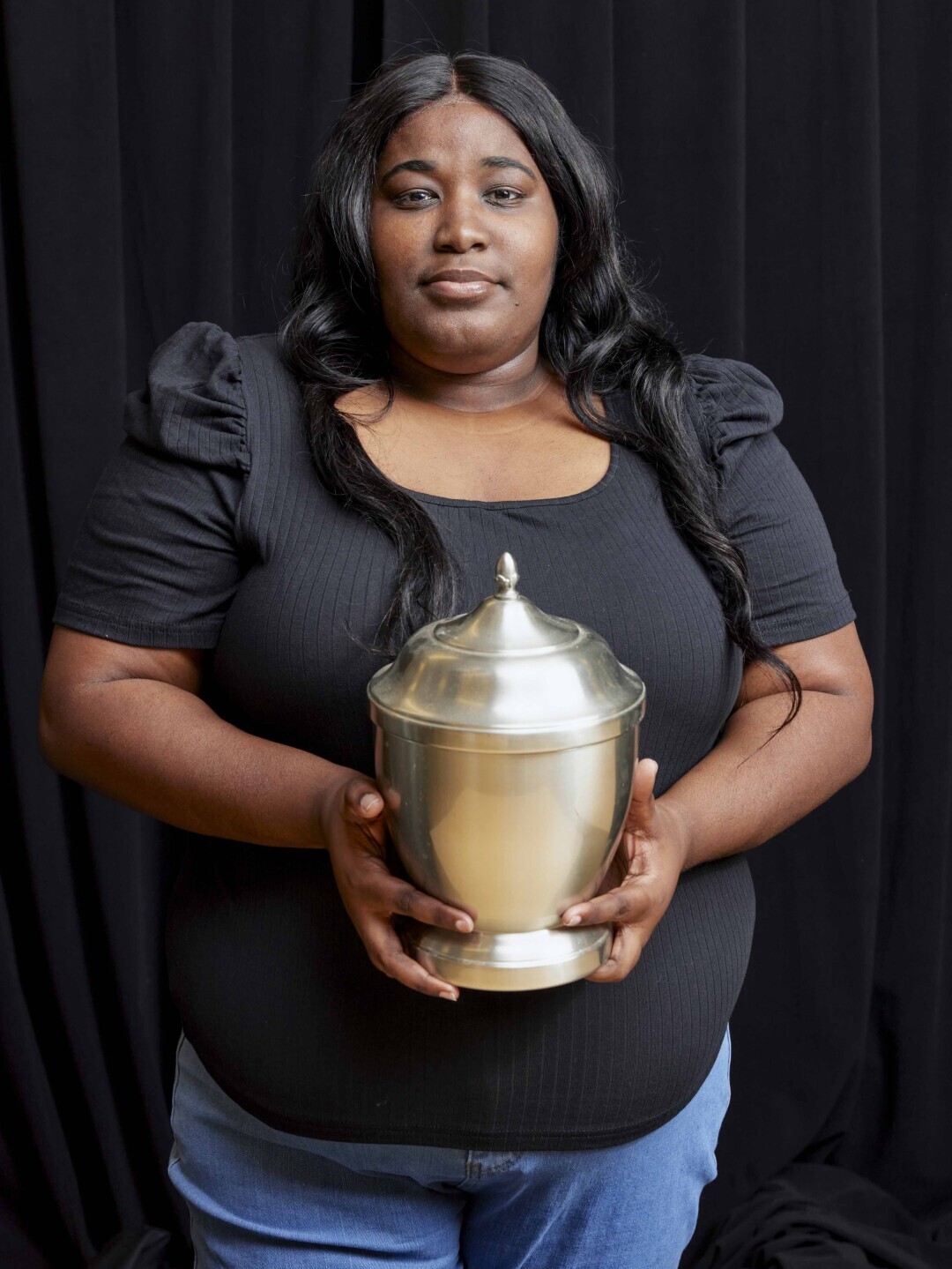
Sikon: LifeNet, the state's organ procurement agency, reached out to me because they had a problem that they needed to fix.
We talked with them, and we worked together. That afforded other opportunities for us to provide them with training and input.
We also got involved in developing some things that they've incorporated into their policies and procedures.
One of our former students is with LifeNet. She has done very well. She was actually an instructor here. Her family was involved in a funeral home, and she went on to work for LifeNet. She's one of their vice presidents and has served as director of operations.
I also had the opportunity to serve as a tissue and organ recovery technician for them in addition to working here. There were many holidays when I was in an operating room doing that work.
I served on the donor council for the state of Virginia for eight years.
We had members who were living donors or recipients, and hearing their stories was incredible.
People always think about saving seven lives and focus on the seven organs that can be transplanted. It's actually more than that now. What's often forgotten is the tissue element, the recovery of tissue from people who donate after their death.
With organs, donation is limited by whether or not you can actually donate because of the cause of death and many other factors. The percentage of people who want to donate and actually can donate organs is very small.
But in the tissue realm, many more people who want to donate can do so. There are amazing things they do with those tissues that impact people's lives.
One donor can change the lives of thousands.
Are you happy with your path?
Sikon: I am. I can't complain.
It was never my intention, at that stage of my life, to be responsible for teaching. It never occurred to me.
It wasn't until I was actually in my career that I was afforded the opportunity to serve as an adjunct here.
I respected it, I learned, and I realized this was something I could do and enjoyed doing.
Being here has afforded me opportunities to become exposed to a lot of things and see things that I would never have experienced otherwise.
Being in the industry itself has given me the opportunity to become acquainted with people I would never have met.
You get to know the families. A lot of the people I came up with in the industry have now retired and moved on, so it's all about the younger generation.
I'm now teaching grandchildren of students I've taught before. Last semester, I had a grandchild of one of my first students.
This interview took place in October 2026. It is a part of the new Meet the Major digital series featuring the people who drive Brightpoint's academic programs and are shaping the future of our region's workforce. Brightpoint offers a variety of health sciences programs, including degrees in funeral services.