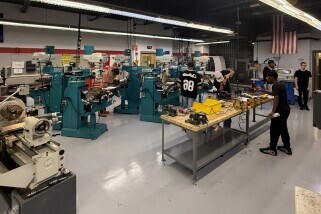

Meet the Major: Precision Machining with Les and Dustin Bell
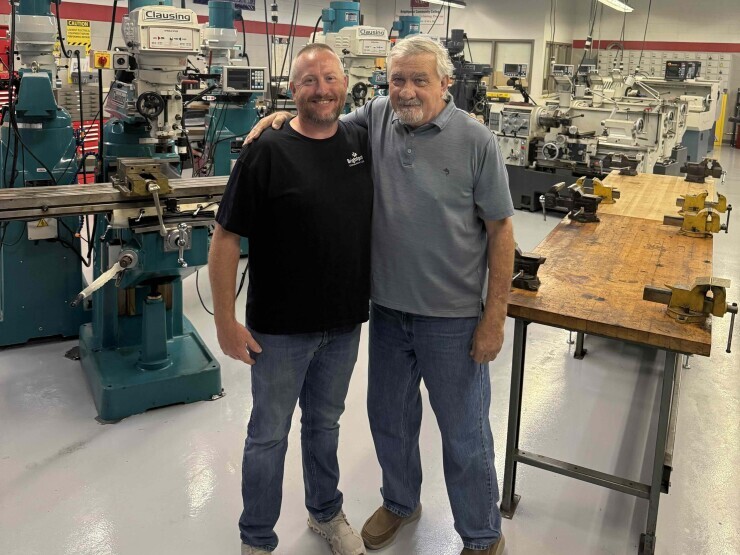
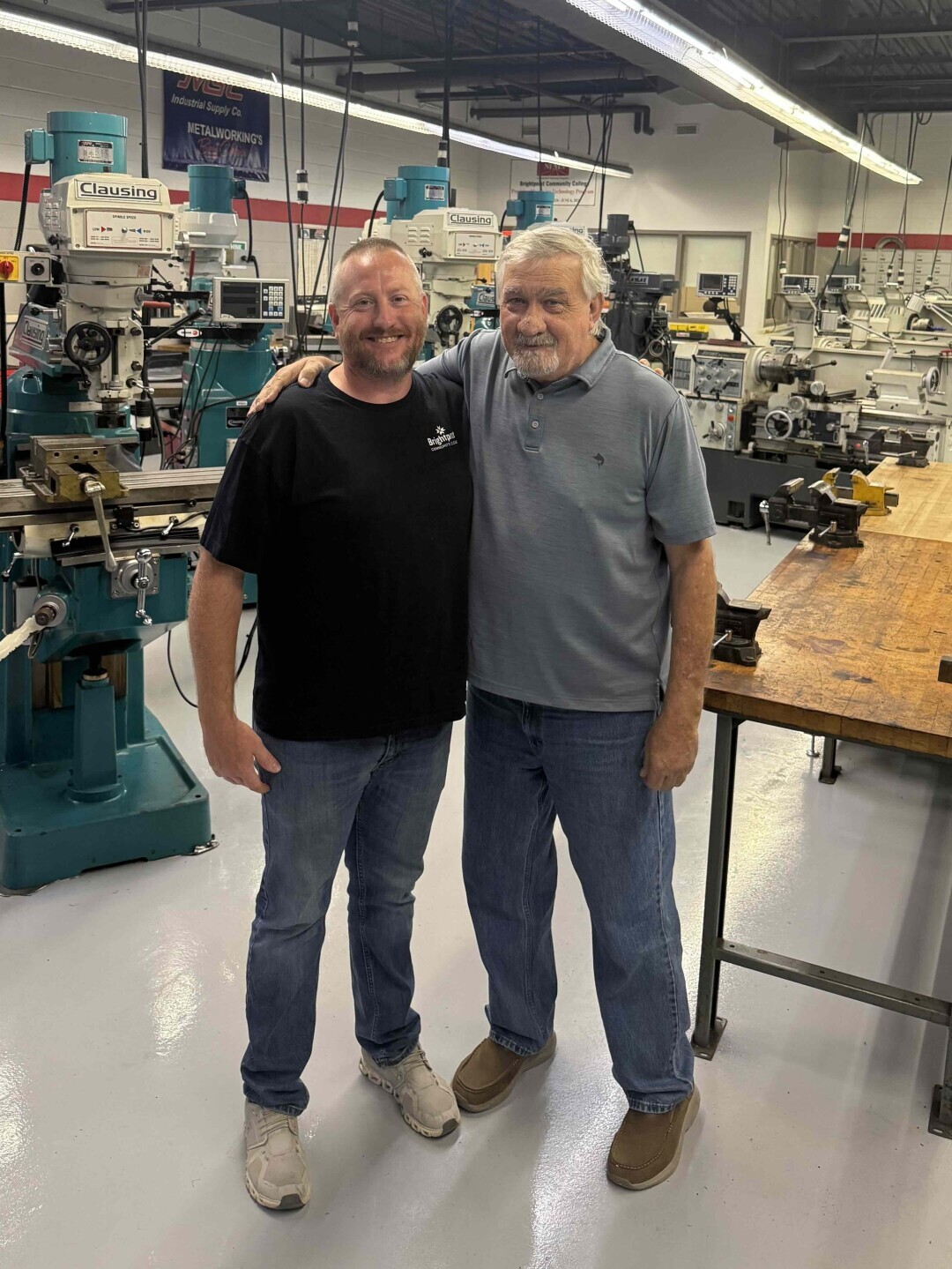
When Dustin Bell was 14, he watched his father, Les, work in a machine shop. Today, the father and son are teaching the trade together at Brightpoint, carrying machining into the next generation. And while the technology has evolved, the need for skilled machinists hasn’t. From the cars we drive and aircraft we fly to medical devices and everyday items, machining is behind more of our world than most of us realize. In this edition of Meet the Major, Dustin and Les share what keeps them excited about the field and why they believe it continues to offer students a challenging and rewarding path forward.
Dustin Bell and Lester “Les” Bell are instructors in precision machining at Brightpoint Community College, where their shared commitment to the trade spans two generations. Les, a journeyman machinist and longtime educator, spent decades teaching machining and served as head of the college’s Industrial Technology department before retiring; he has since returned to Brightpoint as an adjunct instructor. Today, his son Dustin leads Brightpoint’s precision machining program as program head of Machine Technology, preparing students for careers in advanced manufacturing through hands-on training in manual and computer numerical control (CNC) machining.
Question: What’s something in this field that most people would be surprised to learn?
Dustin Bell: Most anything you come in contact with is made by a machine, whether it’s a water bottle or anything else you use every day. Other trades depend on machining at some point to produce the parts for their trades—wire nuts for electricity, welding components for welding. Machining is kind of the foundation of everything.
Question: What first made you interested in this field? Was there a particular moment when you were hooked?
Dustin Bell: For me, it was watching my father in a shop when I was 14 years old, and I knew I was hooked. I’ve always liked hands-on work. I had the mechanical aptitude, and when you have those components and those ingredients, it’s definitely a good recipe for becoming a machinist.
Les Bell: I started out working for BFGoodrich Rubber Company, and I didn’t like it. I only worked two weeks, and a guy came up and said, “There’s a job in a machine shop.” I didn’t even know what machining was. So I started and was hooked.
I worked in the industry for almost 12 years. I started teaching in 1985 at Hopewell High School, and I left Hopewell High School and came here in 2000. So I’m hooked.
Question: What’s a moment when you’ve seen a student surprise themselves with what they’re capable of doing?
Dustin Bell: That would be multiple times, multiple semesters. When students come in and initially see this trade, they can become very overwhelmed and discouraged because they see the complexity of what we do.
Then, once they start to build the foundational blocks of how machining works and begin executing projects on the machine tools they’re using, we start to see that switch.
We start them out on manual equipment first, and then we move them on to the more advanced side of manufacturing, which is computer numerical control. Once they can make a part to 100% accuracy and know that part can be used in manufacturing or somewhere else, that definitely flips a switch for them. It lets them know that they’ve accomplished something and met a challenge.
Most anything you come in contact with is made by a machine, whether it’s a water bottle or anything else you use every day. Other trades depend on machining at some point to produce the parts for their trades—wire nuts for electricity, welding components for welding. Machining is kind of the foundation of everything.
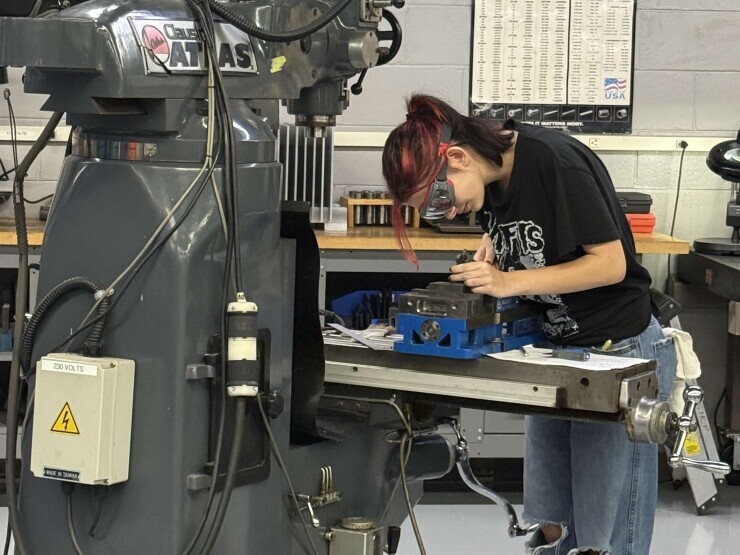

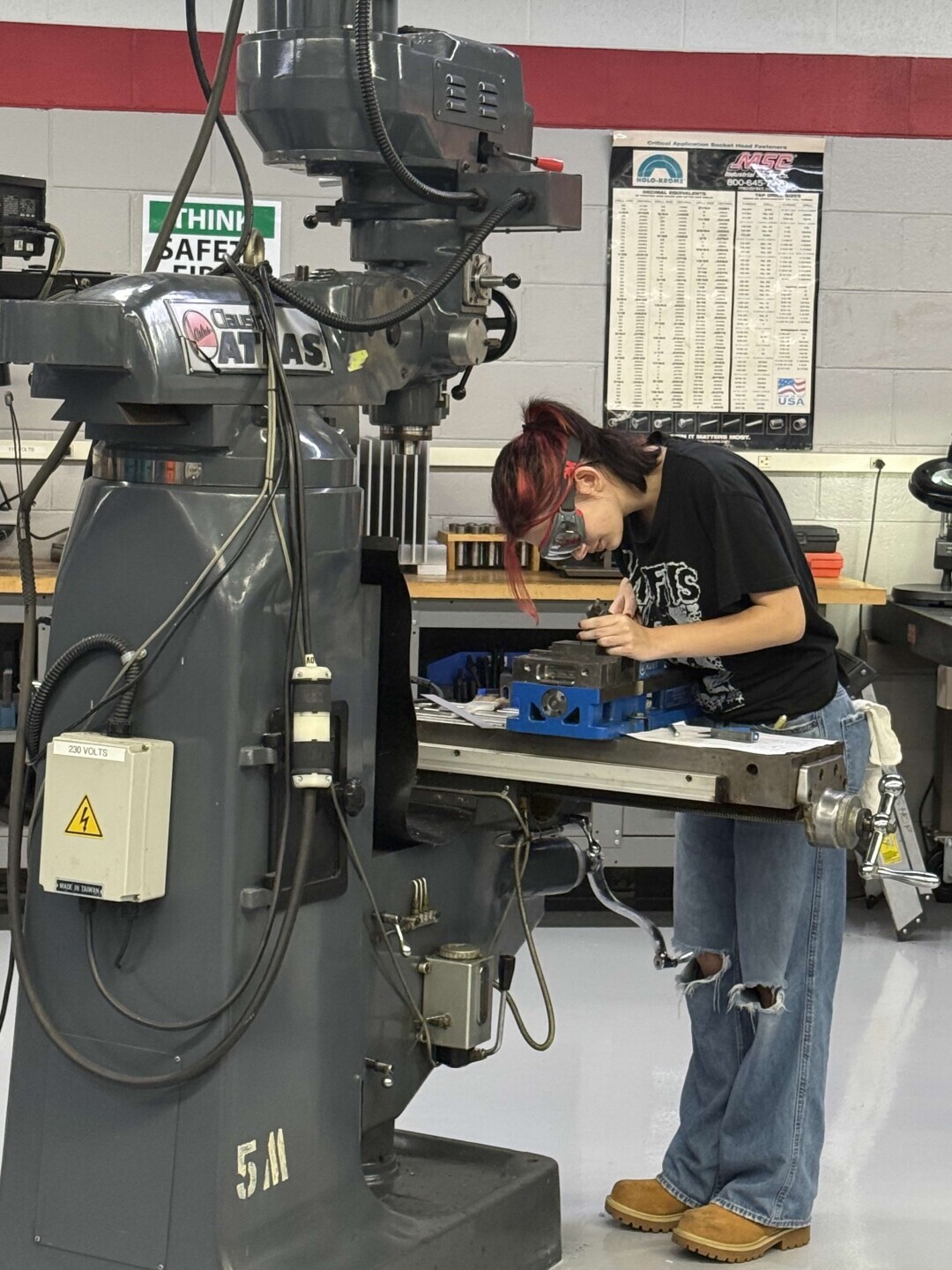
Question: What are some careers connected to this major that students might not immediately think of?
Dustin Bell: Machining connects to almost all trades. You have aerospace and medical. When you think about medical fields, you don’t necessarily think about machining, but there’s a machine out there making all the components needed for needles, devices, catheters and everything like that.
Les Bell: Medical is probably one of the most overlooked because it encompasses so much, and machining is a very big part of it.
Dustin Bell: Then there’s aerospace and defense. Every automobile that you ride around in requires machinists. It’s really very broad. Machining covers a lot.
Question: Where have you seen Brightpoint students go next?
Dustin Bell: Right now, our machining program is at around an 87% placement rate for students graduating from our 40-credit certificate program.
We’re putting most of these students into apprenticeships, local industries and smaller companies. We have seen students who started out as six-month students in the program who have now gone on to become managers of small shops.
Les Bell: We’ve had students at Philip Morris, DuPont—you name it, all the big companies. We’ve had students who started in the program not knowing anything about machining who have actually become owners.
We’re putting most of these students into apprenticeships, local industries and smaller companies. We have seen students who started out as six-month students in the program who have now gone on to become managers of small shops. We’ve had students at Philip Morris, DuPont—you name it, all the big companies. We’ve had students who started in the program not knowing anything about machining who have actually become owners.

Question: What have your students taught you?
Dustin Bell: Patience, resilience and the ability to adapt the way that you teach a student when it comes to hands-on training, because not all students learn the exact same way.
I’m the type of person who wants every student to get to the same finish line, and you learn very quickly that they’re not all going to get there the same way.
Being able to adapt on the fly in how you teach hands-on training is probably something that the students have taught us. Those diverse learning capabilities have definitely sculpted us into better instructors.
Question: If you could go back and talk to yourself when you were choosing what to study, what would you say?
Dustin Bell: I do not regret my decision to go into the field at all. It has given me a great livelihood. It has tested my abilities at certain points because it’s very demanding.
When I was in nuclear power generation, I was working 90 hours a week, six months straight with no time off. So there are parts of the trade that can be very difficult.
But I think the overall outcome—the challenges that you can meet, the money that’s out there to be made—the salary is pretty great for a machinist once you get to the top level. I don’t think I would have changed my decision.
Les Bell: For me, I think it’s always been a challenge. The biggest thing is hearing from students who graduated in 1985 or somewhere around then, and they still call me up and say, “Hey, thank you.”
It’s always been a challenge, but hearing from former students is the greatest asset of all.
This interview took place in September 2026. It is a part of the new Meet the Major digital series featuring the people who drive Brightpoint's academic programs and are shaping the future of our region's workforce. Brightpoint offers a wide-range of advanced manufacturing and skilled trades programs, including programs in precision maching.
Related News
View All News-


What does it take to turn a love of music into something more? At Brightpoint Community College, students are discovering that studying music is about more than learning notes and performing on stage. It takes dedication, creativity and a willingness to grow. In this edition of Meet the Major, Dr. David Guthrie, professor of music and head of Brightpoint's music program, shares how his lifelong passion for music shaped his career, the moments that make teaching rewarding and how Brightpoint helps students build a foundation for their next steps in music.
-

When artificial intelligence meets community focus, technology transforms from an abstract concept into a tool for real-world change. That's just what happened at the recent AI Hackathon for Good at Brightpoint's Midlothian Campus.
-

Today’s nurses need to be tech-savvy, but some of the most important skills they bring to the job are decidedly human. As nursing evolves alongside emerging technologies like AI and advanced simulation, traits like communication, adaptability, accountability, and compassion remain essential to providing exceptional care. In this edition of Meet the Major, learn how Brightpoint is fusing technology and human connection to prepare nursing graduates for whatever comes next.
-


Whether you’re starting fresh or keeping your momentum going, there’s still time to sign up for fall classes kicking off on October 19 at Brightpoint. Our second 7-week session gives you a simple way to keep moving forward before the end of the year.